Technical Data
Sandwich Panel Specifications & R-Value
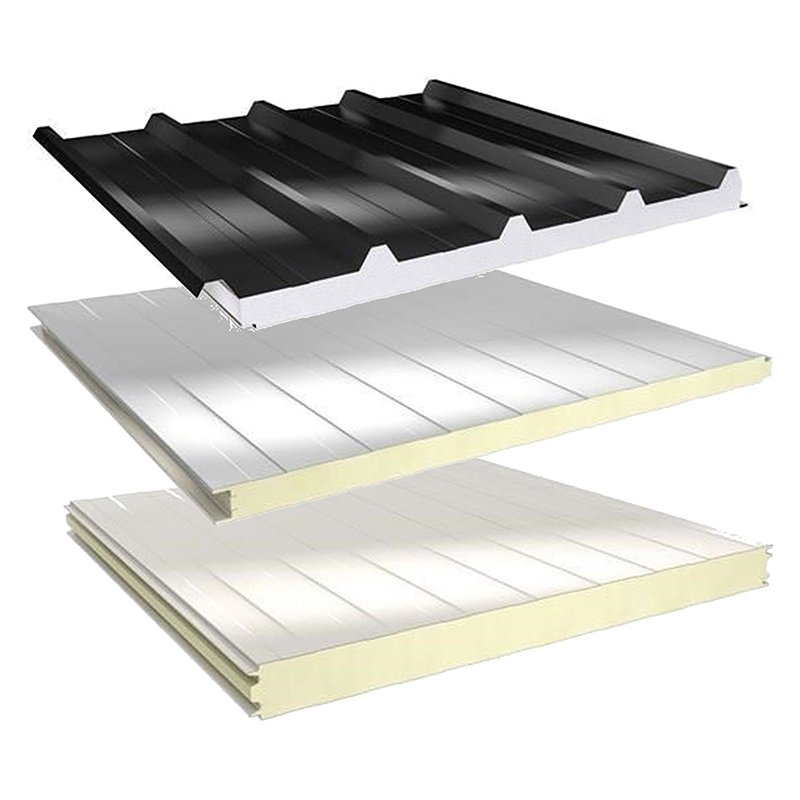
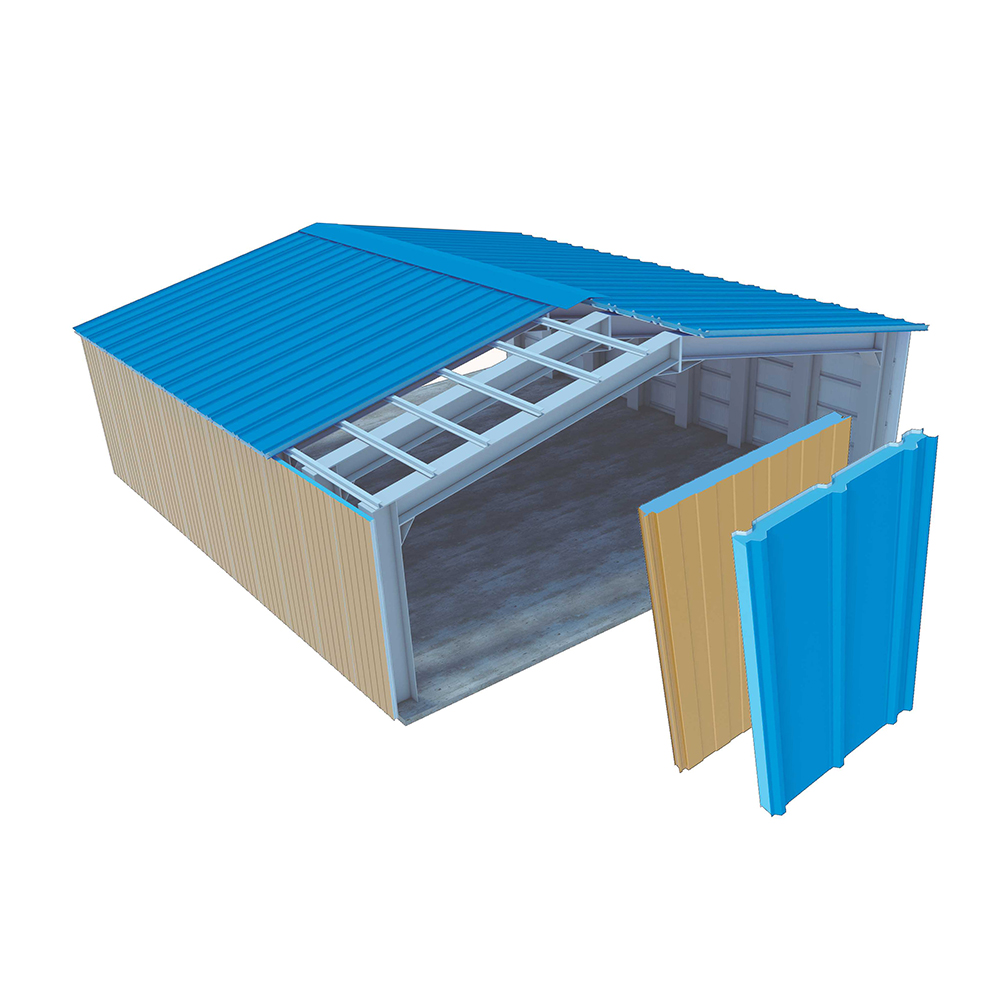
Detailed thermal and structural data for ZhuAi insulated sandwich panels — including R-value by core type and thickness, thermal conductivity, surface options and allowable span for wall panels. Use these figures for energy calculations and early-stage design.
R-Value of ZhuAi Sandwich Panels (by insulation core & thickness)
| Insulation Core |
K-Value (W/m·K) |
K-Value (BTU·in/h·ft²·°F) |
R-Value @ 50 mm |
R-Value @ 75 mm |
R-Value @ 100 mm |
| PU / PIR (Polyurethane) |
0.021 |
0.00640 |
26 |
38 |
51 |
| EPS (Expanded Polystyrene) |
0.030 |
0.00915 |
18 |
27 |
36 |
| Glasswool |
0.034 |
0.01037 |
16 |
24 |
32 |
| Rockwool |
0.038 |
0.01159 |
14 |
21 |
28 |
R-value increases with panel thickness. For cold rooms, cold storage and climate-controlled buildings, PU/PIR cores deliver the highest R-value per inch among common sandwich panel insulation materials.
How to Read R-Value
R-value measures thermal resistance — the higher the R-value, the better the insulation. A 100 mm PU sandwich panel reaches about R-51, while 100 mm rock wool is about R-28. For US and Australian projects that specify minimum wall R-values, PU/PIR panels allow thinner walls for the same thermal target.
Choosing a Core Type
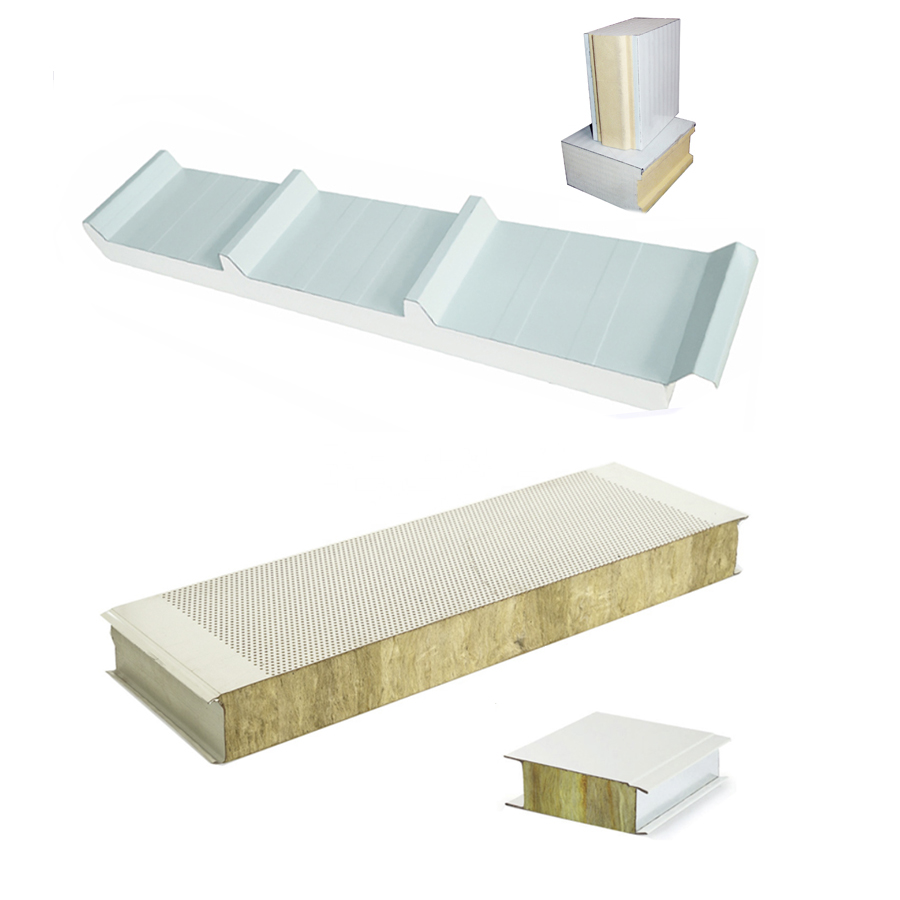
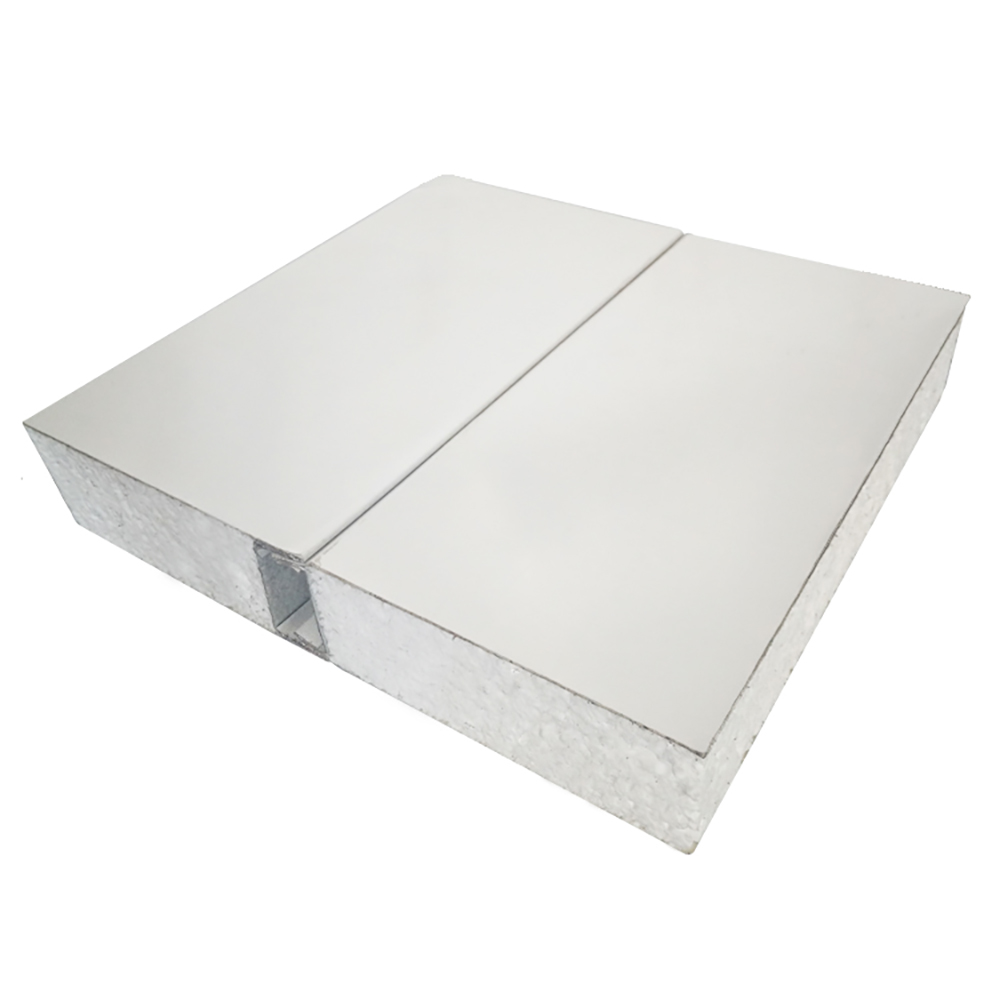
PU/PIR for maximum energy efficiency and cold storage. Rockwool when fire rating (Grade A) and acoustic absorption are required. EPS for cost-sensitive warehouses and general industrial buildings. Glasswool is available on request for acoustic sandwich panel projects.
Need a Custom Spec?
Panel thickness, length, steel sheet gauge and color can be customized. Send your drawings or thermal target and we will recommend a sandwich panel specification for your project.
Get Spec Advice